
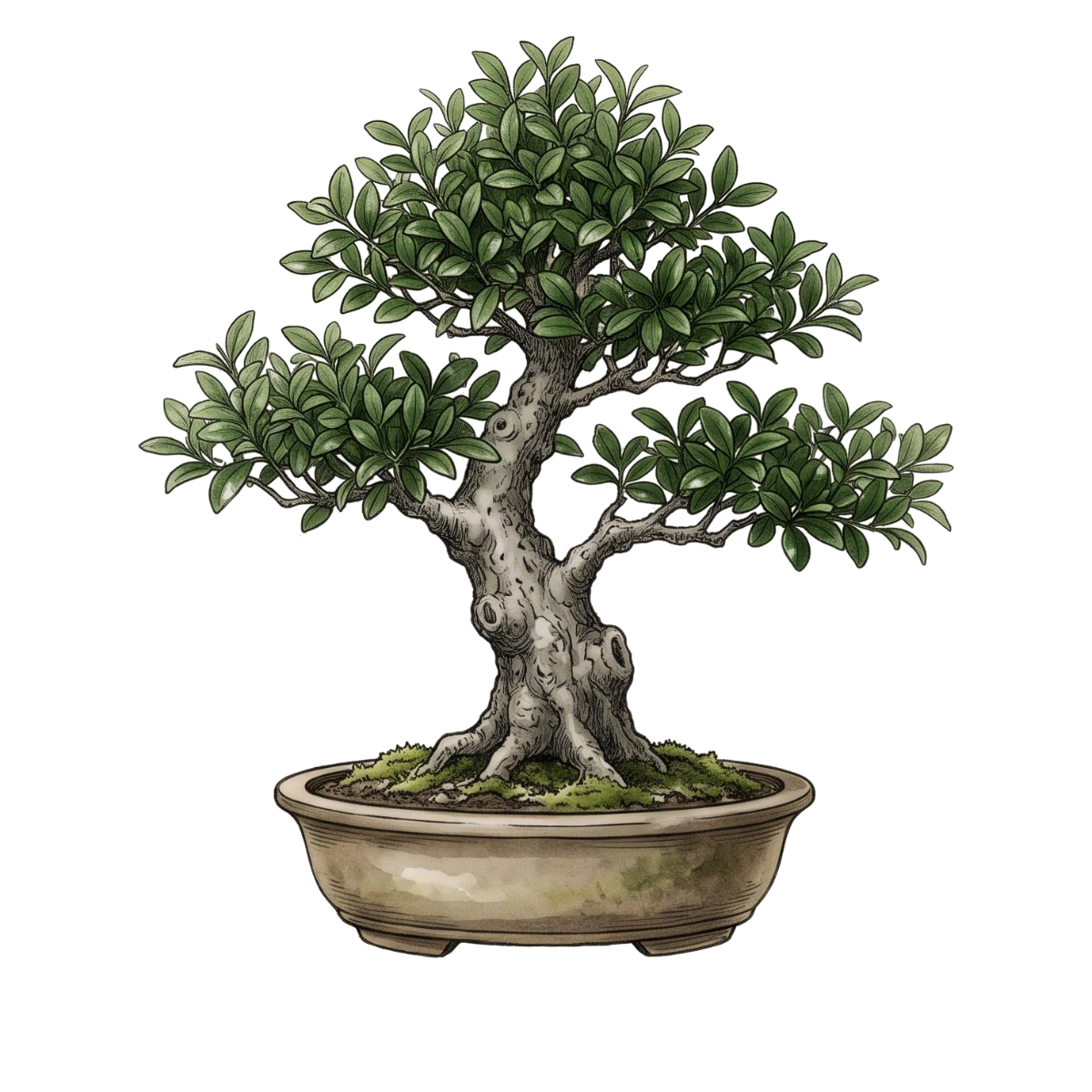
It is related to the olive and the ash. In southern China privet bonsai stand at the door of almost every house. It is one of the most rewarding species to start with.
At a glance
- Evergreen
- Outdoors, sheltered in winter
- Full sun
- Only short, mild frosts
- Easy care
- Main attraction: FlowersFruit
- Position
- Plenty of light, with some direct sun.
More detail
It needs plenty of light, especially in winter. In a Mediterranean climate it can live outdoors from spring to autumn.
- Watering
- Don’t let it dry out. In summer, it drinks a lot. How to water, step by step
More detail
Water as soon as the surface starts to dry. Outdoors in hot weather, it may need watering twice a day.
- Feeding
- From spring to autumn.
More detail
A balanced fertiliser every two or three weeks while it is growing. It grows fast.
- Soil
- A bonsai mix with some organic matter.
More detail
Akadama with pumice and some organic matter.
- Repotting
- Every 2 or 3 years, in spring.
More detail
It fills the pot with roots in two or three years. Repot in spring.
- Pruning
- It takes hard pruning. It sprouts easily.
More detail
It regrows very well. Prune two or three times a year to keep the shape.
- Pinching
- With 6 to 8 leaves, leave 2.
More detail
Let the shoot grow six to eight leaves and cut it back leaving two.
Trimming removes the flowers at the tips: as a bonsai it hardly ever flowers.
- Wiring
- Young branches, from spring to summer.
More detail
Young branches bend well. They thicken fast: check the wire.
- Cold
- Chinese privet can’t take frost: keep it above 5 °C.
More detail
Chinese privet, the one most often sold as bonsai, can’t take the cold: shelter it below about 5 °C. Other species are hardier.
Calendar
Based on a Mediterranean climate. One of the easiest to start with.
Over the years
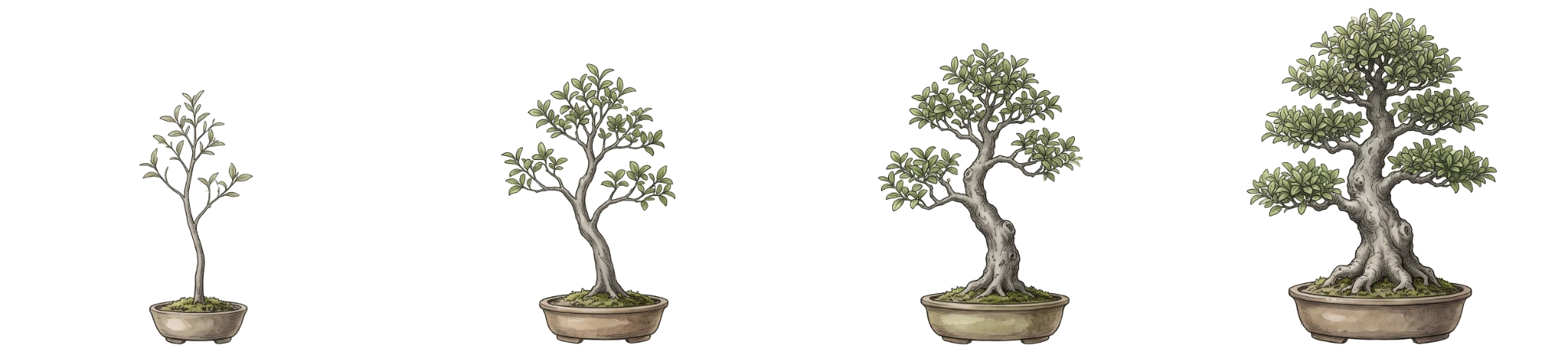
An approximate guide, assuming continued cultivation and pruning.
When you bring it home
- Unpack it today. Take the tree out of the box and remove any plastic or wrapping from the pot.
- Find it a spot. Give it plenty of light, away from heaters and draughts.
- Feel the soil before watering. If the top layer is still damp, wait.
- Put back any soil that has shifted. Spread it out without piling it against the trunk. It is normal for thick roots to show.
- Check it doesn’t wobble. If it moves in the pot, secure it so the roots can take hold.
- Leave it alone. For the first few weeks, don’t repot, prune or feed it.
If something looks wrong
Aphids and scale: colonies on the shoots and small bumps on the branches.
Spider mites: speckled leaves in dry air.
Leaf drop: from cold or lack of light in winter.
If in doubt, ask before treating.
With dogs and cats Toxic
The ASPCA lists it as toxic to dogs and cats. Keep it out of their reach and, if they chew it, call your vet.
Source: ASPCA, toxic and non-toxic plants for dogs · ASPCA, toxic and non-toxic plants for cats. Checked on 17 November 2026.