
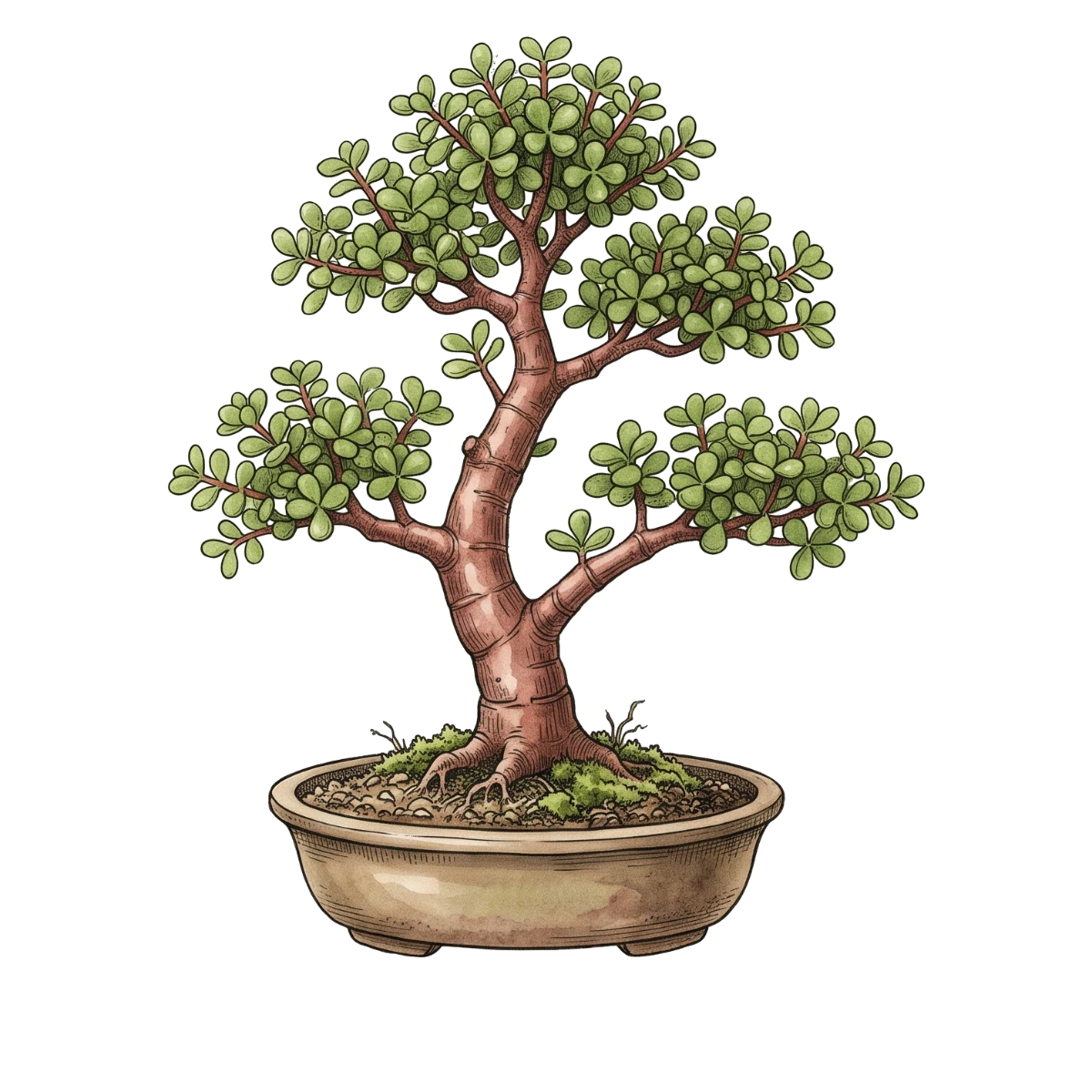
It is a South African succulent that stores water in its leaves and stems. Elephants eat it, which is why it is called «elephant bush», and its Latin name means «purslane-like, from Africa».
At a glance
- Evergreen
- Outdoors, sheltered in winter
- Full sun
- No frost
- Easy care
- Position
- Lots of sun. In summer, outdoors; in winter, sheltered and in the light.
More detail
It needs plenty of light: outdoors, at least 4 to 6 hours of direct sun. In summer it does best on a sunny balcony or terrace.
In winter, indoors by the brightest window or in a frost-free conservatory.
- Watering
- Let the soil almost dry out between waterings. How to water, step by step
More detail
It stores water in its leaves and stems: water thoroughly and wait until the soil is almost dry before watering again.
In winter, with cold and low light, water very little. Overwatering is its main risk.
- Feeding
- Once a month, from spring to the end of summer.
More detail
A mild fertiliser, preferably organic, once a month while it is growing. In winter, none.
There is no need to push it: with little feed it keeps its leaves small.
- Soil
- Very free-draining: a coarse mix with lots of pumice or volcanic grit.
More detail
It needs a soil that dries quickly: plenty of pumice or volcanic grit with a little akadama.
Ordinary potting compost holds too much water.
- Repotting
- Every 2 or 3 years, in spring, with dry soil.
More detail
Repot it in spring or early summer, while it is growing. Do it with dry soil and don’t water until you see new shoots.
It grows slowly and doesn’t need frequent repotting.
- Pruning
- From spring to summer. It takes hard pruning.
More detail
It responds very well to pruning, even hard pruning, and it is the best way to shape it. Do it while it is growing, with the soil a little dry.
Wounds don’t heal like a tree’s: if they are large, seal them.
- Pinching
- Pinch the tips often so it branches.
More detail
During the growing season, pinch the shoot tips with your fingers every few weeks. That way it branches and the canopy becomes dense.
Branches that droop under their own weight can be cut or used for cascade styles.
- Wiring
- Better not: the branches are fleshy and mark. Use guy wires.
More detail
Its fleshy branches mark or snap with wire. It is better to shape it by pruning and, if needed, with gentle guy wires.
If you do wire, use thin wire for a very short time.
- Cold
- It can’t take frost. In winter, dry and above 5 °C.
More detail
It comes from a warm climate: protect it from cold and, above all, from cold combined with damp. Below about 5 to 10 °C, keep it sheltered.
In the cold, hardly any water.
Calendar
Based on a Mediterranean climate. In winter, sheltered and with hardly any water.
Over the years
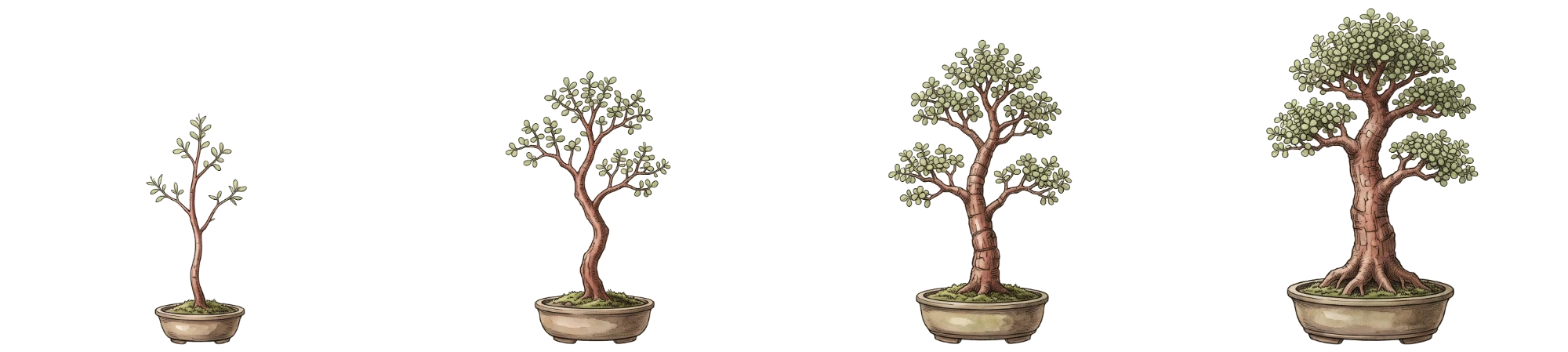
An approximate guide, assuming continued cultivation and pruning.
When you bring it home
- Unpack it today. Take the tree out of the box and remove any plastic or wrapping from the pot.
- Find it a spot. Give it plenty of light, away from heaters and draughts.
- Feel the soil before watering. If the top layer is still damp, wait.
- Put back any soil that has shifted. Spread it out without piling it against the trunk. It is normal for thick roots to show.
- Check it doesn’t wobble. If it moves in the pot, secure it so the roots can take hold.
- Leave it alone. For the first few weeks, don’t repot, prune or feed it.
If something looks wrong
Overwatering: soft leaves and dark stems. Its main risk: let it dry out more.
Scale insects: small bumps or cotton on stems and leaves.
Leaf drop: from lack of light or cold. Move it somewhere brighter.
If in doubt, ask before treating.
With dogs and cats No reliable data
It isn’t on the ASPCA plant list, so there is no reliable information on whether it is toxic. To be safe, keep it where your dog or cat can’t chew it.
Source: ASPCA, toxic and non-toxic plants for dogs · ASPCA, toxic and non-toxic plants for cats. Checked on 17 November 2026.